
Engineering problem
An HPC mezzanine cannot be debugged through the LPC breakout. It needs a breakout with HPC connectors on both sides, even when the 160 LPC pins are all you want to look at.
The problem it solves
The FMC LPC Breakout has LPC connectors, so it passes 160 pins. An HPC mezzanine needs all 400 of its pins connected to the carrier before it runs. Seat it on the LPC breakout and the missing ones keep it from starting, no matter that the signals you wanted to probe are in the LPC subset anyway.
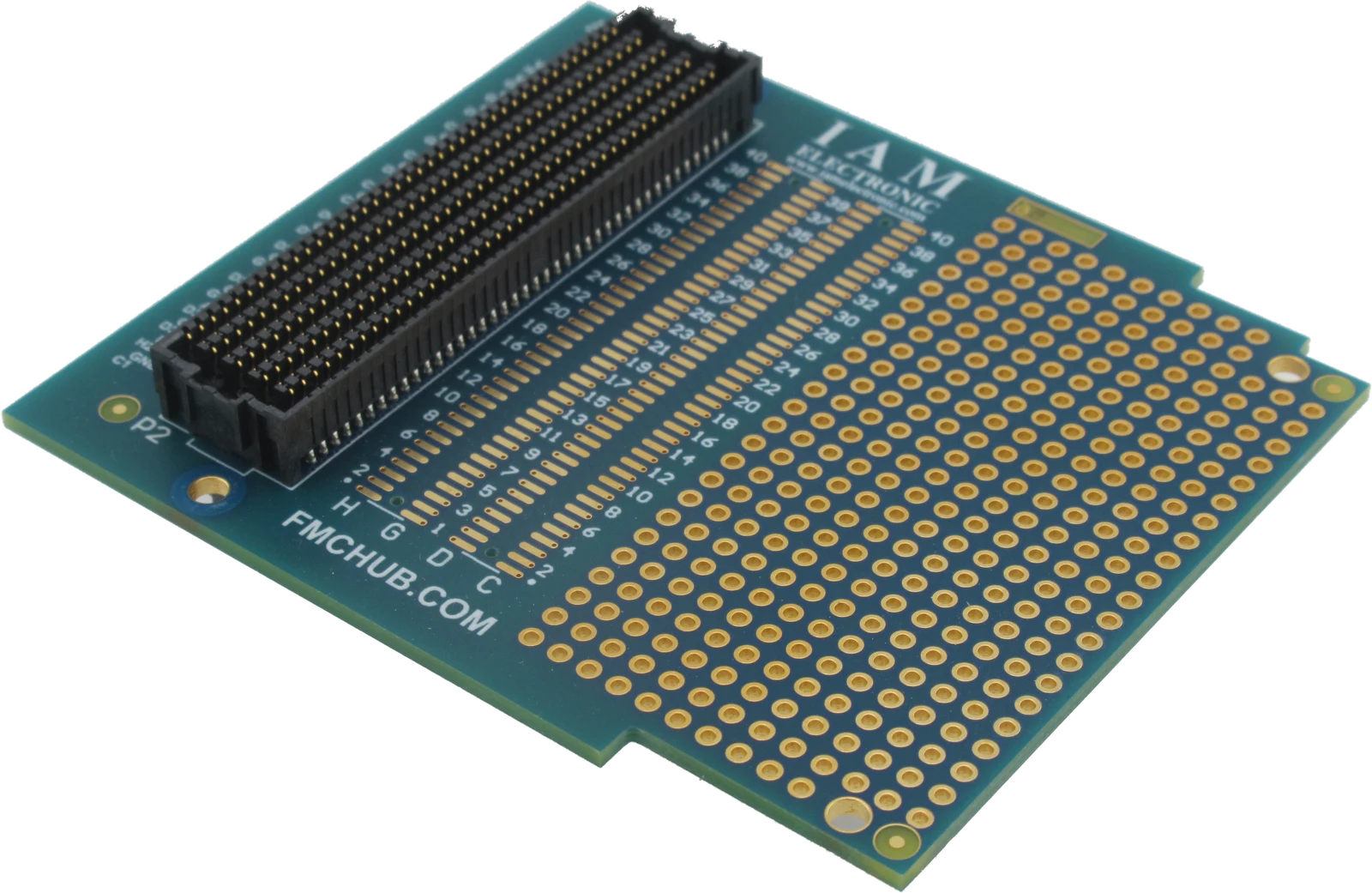
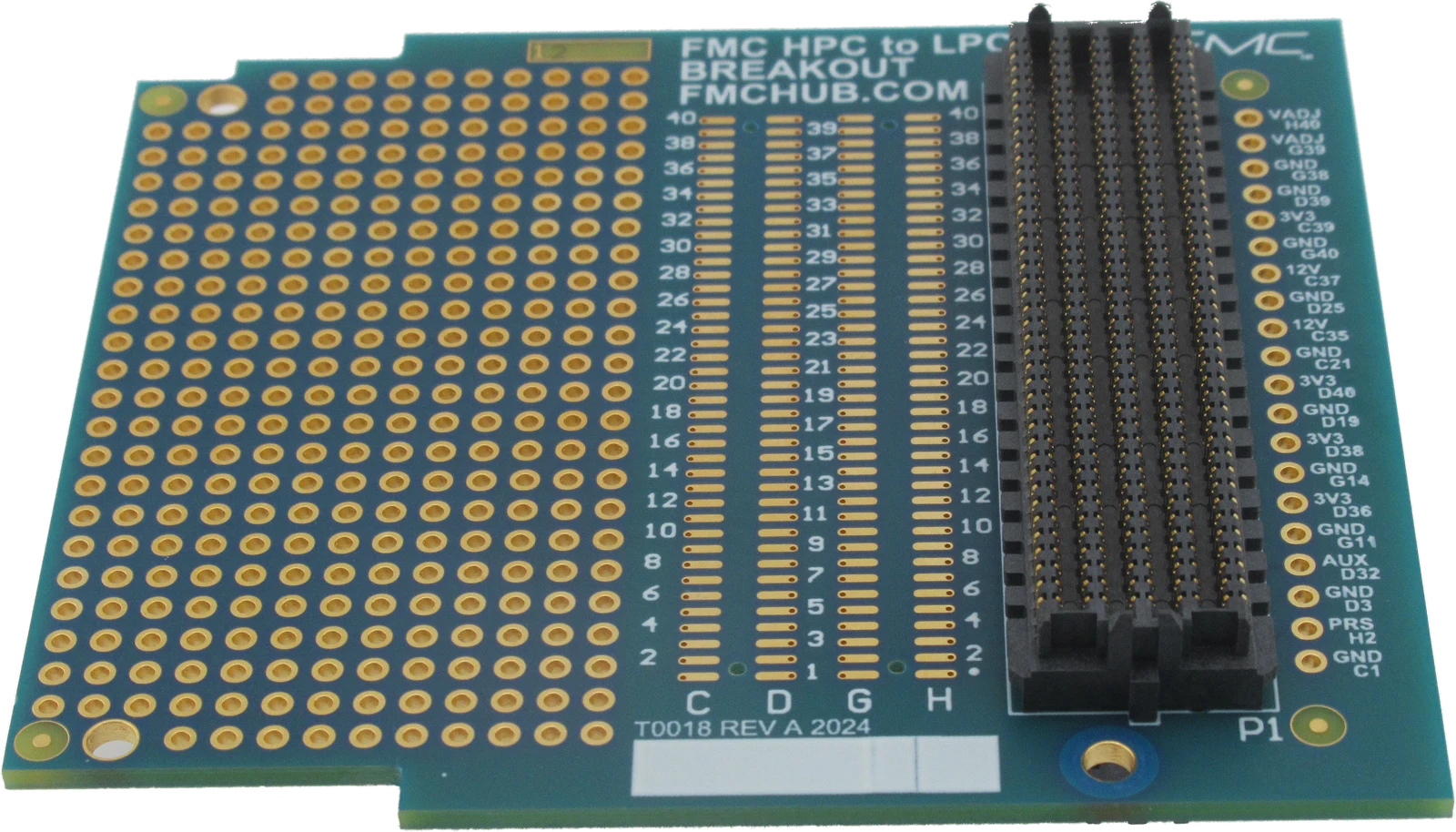
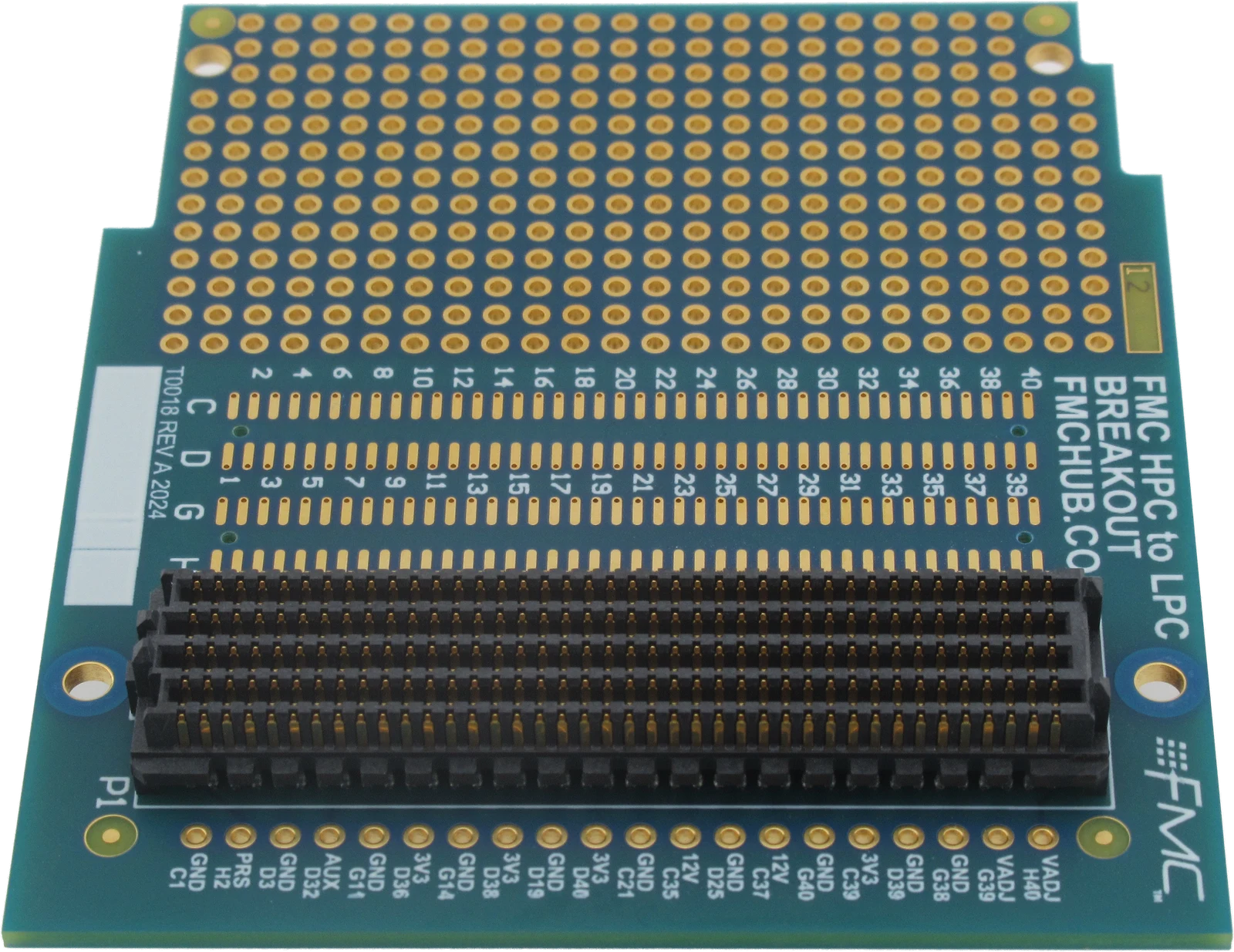
This board is that breakout, built for HPC. It mates the carrier with an HPC mezzanine plug and presents an HPC carrier socket on top, so all 400 pins stay connected end to end and the mezzanine behaves as if nothing were in between. The 160 signals of the LPC subset are additionally routed out to 1.27 mm-pitch pads, which is what bench work needs in practice: the LPC subset is almost always enough to debug with, and the HPC-only pins simply pass through.
The pads carry that subset in the positions the HPC connector gives it. The FMC LPC pinout is what lands on the pads, the FMC HPC pinout the full 400 that pass through.
What fits what. Mechanically the two classes mate either way round, so fit is not the question. An LPC mezzanine seats in an HPC site and runs, because the LPC pins are a subset and every one of them is connected. An HPC mezzanine seats in an LPC site as well, but only the subset positions carry contacts there, so its HPC-only pins stay dead and the board does not work. That second case is the one this breakout removes: every pin connected, and the subset still out on pads for a probe. See the FMC FAQ on connector types for the connector reference.
Features
- ANSI/VITA 57.1 commercial-grade form factor.
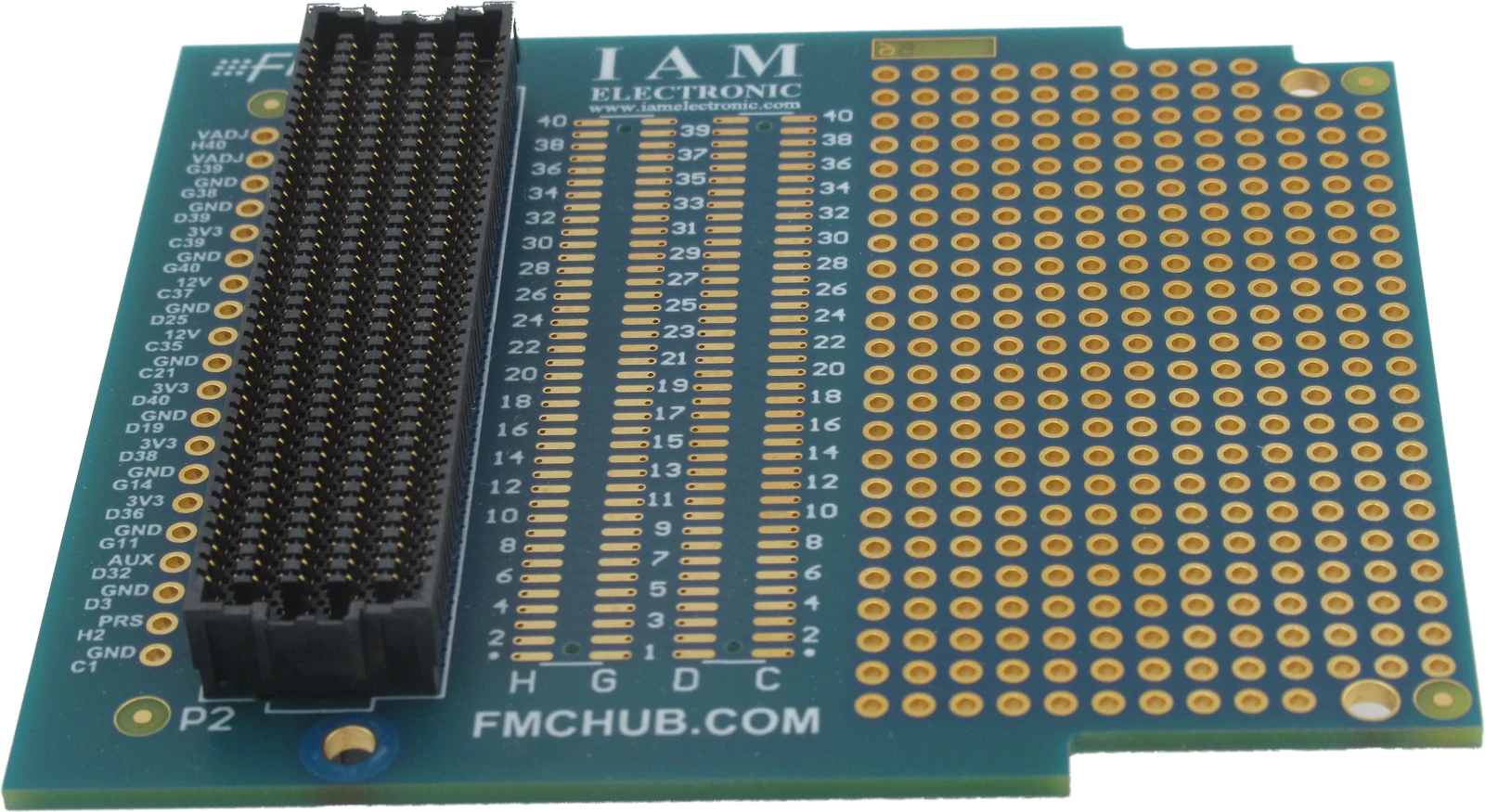
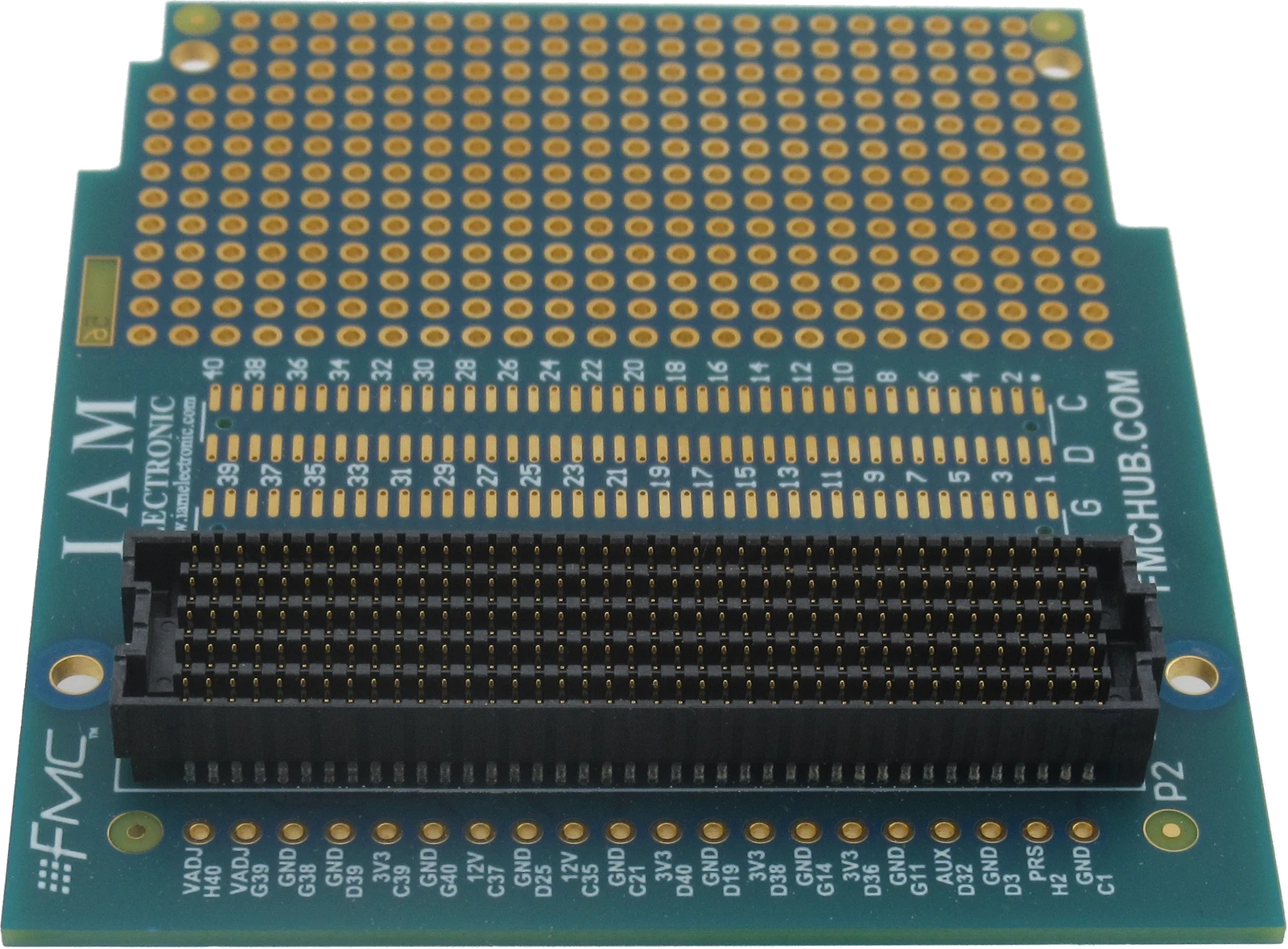
- HPC mezzanine plug on the carrier-facing side; HPC carrier socket on the top side; LPC subset broken out as 1.27 mm-pitch pads.
- All 400 pins connected end to end: the HPC-only pins pass straight through, so the mezzanine sees the carrier it expects.
- Separate breakout of power pins for clean current measurement.
- 2.54 mm-pitch prototyping area for hand-wired add-ons.
- Stackable assembly: combine with the FMC LPC Breakout or other modules.
- Open Hardware: schematics and design files are published.
Applications
- Bench debug of an HPC mezzanine: probe the LPC-subset signals on the pads while every HPC-only pin stays connected to the carrier.
- The LPC Breakout's workflow, extended to HPC: the same probing on the same 1.27 mm pitch, now on an HPC site.
- Power-rail access: VADJ, 3P3V, 12P0V and 3P3VAUX are broken out on their own pads, reachable while a mezzanine is seated.
- Hand-wired add-ons: build a small circuit on the 2.54 mm grid and wire it to a named signal while the mezzanine stays seated.
- Extra clearance: the board doubles as a 10 mm height extender when a tall component or a chassis feature does not fit.
- Education and training: the LPC subset made physical, the same 160 signals an LPC site carries, laid out and labelled on an HPC board.
Board & diagrams
Documentation
The full technical datasheet for FMC HPC to LPC Breakout Board: specifications, block diagram, measurements and mechanical drawings: open the datasheet.